Airplane Parts in English for Kids
Eighteen airplane words form a practical first set: wing, engine, cockpit, cabin, tail, seat, and visible parts from pictures or trips. Airplane Parts in English for Kids stick through images, movements, and short sentences. Start with five or six visible parts before introducing unfamiliar terms. Skip technical detail; teach words children can recognise, pronounce, and use to describe an airplane.
📥 Airplane Parts Word Practice
Learn key airplane words, read clear examples, and build confident sentences.
Leave your email — we'll send the PDF to your inbox.No spam — the PDF plus one short reminder. Unsubscribe anytime.
Essential Airplane Words to Teach First
When you teach Airplane Parts in English for Kids, begin outside the airplane, then move inside. This sequence organises the vocabulary. Choose “airplane” or the British spelling “aeroplane” according to your child’s English variety.
For ages five to nine, start with wing, tail, door, and seat. Older learners can add fuselage, landing gear, and overhead bin. Request pointing before spoken recall: “Show me the cockpit” is easier than “What is this?”
Using the Words in Complete Sentences
Practise Airplane Parts in English for Kids through short, meaningful sentences. A beginner can say, “This is a wing” or “The airplane has two wings.” A confident learner can explain, “The passengers are sitting in the cabin.”
Practise the patterns This is…, It has…, I can see…, and There is…. Examples include: “I can see the airplane’s nose,” “There are windows along the cabin,” and “The wheels are under the fuselage.” Sentence frames isolate each new noun.
Questions create a listening purpose. Ask, “Where do the pilots sit?”, “Which section is at the back?”, or “What goes above the seats?” Accept a short answer, then model the full sentence: “In the cockpit” becomes “The pilots sit in the cockpit.”
Airplane word myths and facts
Myth: Children must learn every airplane component before discussing airplanes.
Fact: A small set of visible words supports descriptions and questions.
Myth: Pointing instead of speaking means the word is unknown.
Fact: Correct pointing demonstrates recognition, which often precedes spoken recall.
Activities for Different Ages
Children aged four to six can match toys or airplane pictures with word cards. Say a word, invite pointing, and add movement. Stretch both arms for wings, turn your hands for a propeller, or draw an air circle for a wheel.
Children aged seven to ten can label an airplane drawing and sort words into outside and inside groups. Airplane Parts in English for Kids can support number practice: “How many windows can you see?” or “Does the airplane have two engines or four engines?”
Learners aged eleven to fifteen can compare airplane pictures, write a description, or explain selected features. Match the task to their level. “The wing helps the airplane fly” should precede technical explanations.
Before each practice session
Practice Games for Home or Class
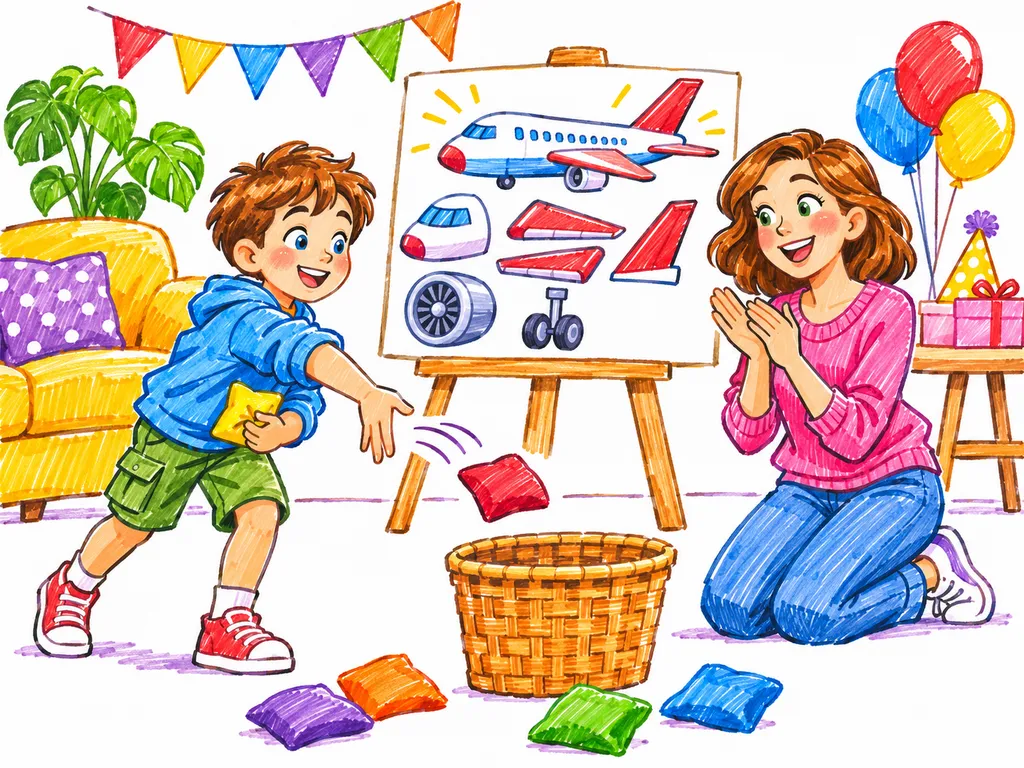
A short routine helps children retain Airplane Parts in English for Kids. Place six word cards beside an airplane picture. Name a part for the child to match, then switch roles. Giving instructions turns repetition into communication.
Build an Airplane Description
Choose three parts. Say one sentence about each, then connect the ideas: “The airplane has two wings. Its engines are under the wings. The passengers sit in the cabin.”
For a memory game, show five labelled parts for twenty seconds. Cover the labels and request their names or spellings. For “What is missing?”, remove one card for identification. Change one element per round.
Keep correction light
If a child says “two wing,” respond with the full form: “Yes, two wings.” The model corrects grammar without stopping the game.
LearnLink tutors can adapt one task through pictures, speech, reading, or writing. Multilingual children may know the concept in another language first. Connect that knowledge to the English word instead of marking it as an error.
Common Mistakes and Clear Corrections
Children may confuse cockpit and cabin because both are inside the airplane. Link each place to people: pilots work in the cockpit; passengers sit in the cabin. Children may call every moving part a propeller, although airplanes can have engines without visible propellers.
Grammar errors often emerge in descriptions of several parts. Practise the plurals wings, engines, wheels, and seats. Model possession with the airplane’s nose or the nose of the airplane.
Pronunciation improves through accurate models, not demands to “say it properly.” Divide longer words into manageable parts: cock-pit, fu-se-lage, and pro-pel-ler. Then place the full word in a sentence to combine meaning and sound.
- Point to four airplane parts and ask your child to name each one.
- Contrast wing and tail using a picture, then repeat both words clearly.
- Model “This is the cockpit,” and have your child copy the sentence.
- Correct “airplane’s wheel” gently by practicing the plural phrase “airplane wheels” twice.
- Review three labels in a book and praise accurate pronunciation immediately.
When a word has several meanings or pronunciations, Cambridge Dictionary is a useful check before turning it into child-friendly examples.
Frequently Asked Questions
How Many Airplane Words Should a Child Learn at Once?
For most beginners, four to six words suit one session. Revisit Airplane Parts in English for Kids through several short activities, not one long list. Add vocabulary after your child recognises the earlier set unaided and uses part of it in short sentences.
Should Children Learn Technical Words Such as Fuselage?
Yes, but technical terms should follow familiar words such as wing, door, and seat. Teach fuselage when your child can connect it to the main body in a picture. Concrete meaning and brief practice make difficult-looking words manageable.
What If My Child Understands the Words but Will Not Say Them?
Continue with pointing, matching, and either-or questions. Recognition precedes spoken recall. Offer a model without pressure: “Yes, that is the tail.” Invite speech with an easy choice such as “Wing or tail?” One-word answers can develop into complete sentences.
How Can a Multilingual Child Practise These Words?
Connect each English word to a known concept. Name the pictured part in English, allowing a brief comparison with another language when needed. Then return to an English sentence such as “This is the wing.” Existing languages support learning.
For your next session, choose five words, practise for 10 minutes, request pointing to each item, and finish with two complete sentences. Repeat the set twice this week before adding vocabulary.
A short one-to-one lesson can show what level and pace fit your child — book a trial English lesson.
Stay updated on our latest tips and resources by following us on Instagram LearnLink.